
Learn what happens during perimenopause, why your body feels different, and how women can support their health, energy, and confidence through midlife.
The Season Nobody Properly Prepared Us For
Many women can tell you exactly what puberty felt like.
They remember the changes, the emotions, the confusion, and the realization that their bodies were entering a new stage of life.
Yet somehow, many women arrive at perimenopause with almost no preparation.
One day things seem normal.
Then sleep changes.
Energy changes.
Weight changes.
Mood changes.
Recovery changes.
The strategies that worked for years suddenly stop producing the same results.
And because few people talk openly about it, many women assume they are doing something wrong.
They wonder if they have become lazy.
Undisciplined.
Weak.
Unmotivated.
The truth is usually much simpler.
Their bodies are changing.
And understanding those changes is one of the most empowering things a woman can do.
What Is Perimenopause?
Perimenopause is the transition period leading up to menopause.
It often begins in a woman's 40s, although some women experience symptoms earlier.
During this time, hormone production becomes less predictable.
Estrogen and progesterone levels fluctuate rather than decline in a straight line.
This unpredictability can create a wide variety of symptoms.
Some women notice only a few changes.
Others experience significant physical and emotional shifts.
The experience is highly individual.
What matters is recognizing that these changes are biological, not personal shortcomings.
Common Perimenopause Symptoms
Many women are surprised to learn how many symptoms can be connected to hormonal fluctuations.
Common symptoms include:
- Irregular menstrual cycles
- Sleep disturbances
- Increased fatigue
- Hot flashes
- Night sweats
- Brain fog
- Mood changes
- Anxiety
- Increased stress sensitivity
- Weight gain
- Reduced recovery from exercise
- Joint discomfort
- Changes in libido
Not every woman experiences every symptom.
But many women experience enough of them to feel like they no longer recognize their own bodies.
That can be emotionally challenging.
Especially when no one has explained what's happening.
Why Weight Loss Often Feels Harder
One of the most frustrating complaints during perimenopause is weight gain or difficulty losing weight.
Many women report that they are eating similarly, exercising similarly, and living similarly, yet their bodies respond differently.
Several factors contribute to this.
Hormonal fluctuations can influence appetite regulation, fat storage, insulin sensitivity, and energy expenditure.
Sleep disruption can increase hunger signals and reduce recovery.
Stress often rises during midlife due to career demands, caregiving responsibilities, aging parents, and changing family dynamics.
Muscle mass may gradually decline if strength training is not prioritized.
All of these factors can affect body composition.
This does not mean weight loss becomes impossible.
It means the approach often needs to evolve.
The Importance of Strength Training During Perimenopause
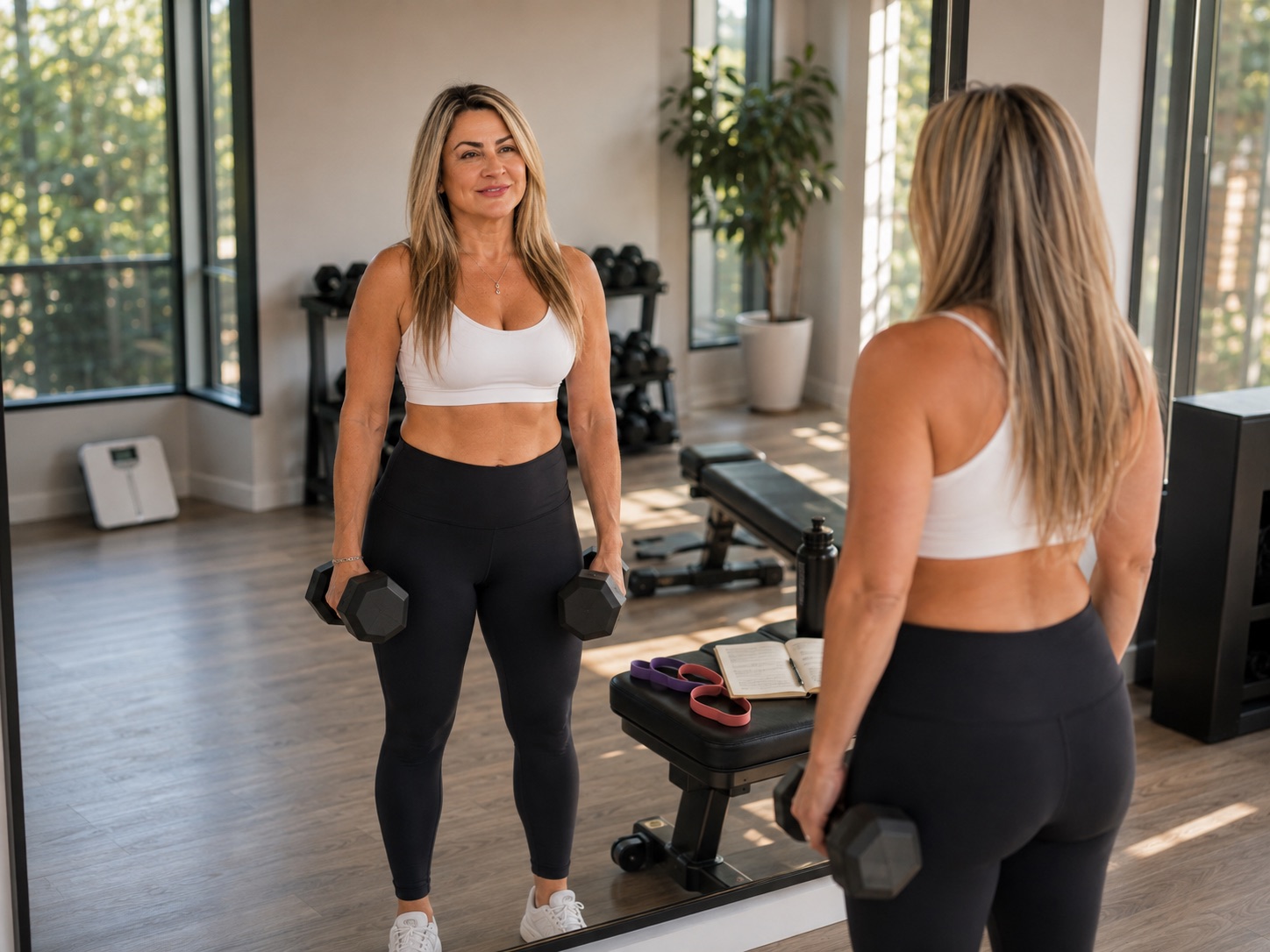
One of the most effective tools available to women during perimenopause is strength training.
Strength training supports:
- Muscle preservation
- Bone density
- Metabolic health
- Balance and mobility
- Confidence
- Functional independence
Many women still focus primarily on cardio when trying to lose weight.
While cardiovascular exercise has important health benefits, preserving muscle becomes increasingly important during midlife.
Muscle is not just about appearance.
It is about resilience.
The stronger your body remains, the better equipped it is to navigate aging.
Why Recovery Matters More Than It Used To
Many women notice they cannot push through exhaustion the way they once did.
Workouts that felt manageable years ago suddenly require more recovery.
Poor sleep affects performance more significantly.
Stress lingers longer.
This is not a sign of weakness.
It is a sign that recovery deserves more attention.
Sleep, protein intake, hydration, stress management, and rest days become essential components of health rather than optional extras.
Supporting recovery allows the body to adapt rather than simply survive.
The Emotional Side of Perimenopause
One aspect of perimenopause that often gets overlooked is its emotional impact.
Many women have spent decades identifying themselves through achievement, caregiving, productivity, or service.
Then midlife arrives and asks different questions.
Who are you when your children need you less?
Who are you beyond your career?
Who are you when your body changes?
Who are you becoming?
For some women, perimenopause is not only a hormonal transition.
It is an identity transition.
That can feel uncomfortable.
But it can also become an opportunity.
An invitation to reconnect with yourself rather than continue postponing yourself.
Stop Fighting Your Body
One of the greatest gifts a woman can give herself during this season is ending the war with her body.
Your body is not betraying you.
Your body is communicating with you.
The answer is rarely more punishment.
Rarely more restriction.
Rarely more criticism.
The answer is usually greater understanding.
More support.
Better recovery.
Smarter training.
Adequate nutrition.
Realistic expectations.
And significantly more self-compassion.
What Actually Helps
Women often search for the perfect supplement, diet, or program to fix everything.
While there is no single solution, several foundational habits consistently support health during perimenopause:
Prioritize protein.
Strength train regularly.
Walk consistently.
Protect sleep whenever possible.
Manage stress intentionally.
Stay hydrated.
Schedule regular health screenings.
Work with qualified healthcare professionals when needed.
Most importantly, stop comparing yourself to your 25-year-old self.
She had a different body, different hormones, different responsibilities, and different life circumstances.
Your goal is not to become her again.
Your goal is to become the strongest, healthiest version of yourself now.
The Fire & Grace Perspective
Perimenopause is not a problem to solve.
It is a transition to navigate.
Like every major life transition, it requires adaptation.
Patience.
Learning.
And grace.
The women who thrive during this season are rarely the women who fight the hardest.
They are often the women who learn to listen.
They learn what their bodies need.
They adjust their expectations.
They build strength.
They prioritize recovery.
They stop measuring themselves against outdated standards.
And they begin creating a new relationship with themselves—one built on respect instead of criticism.
That is not giving up.
That is growing wiser.
And there is tremendous strength in that.
What is the difference between perimenopause and menopause?
Perimenopause is the transition leading up to menopause when hormones fluctuate and symptoms begin to appear. Menopause is officially reached after twelve consecutive months without a menstrual period.
At what age does perimenopause usually start?
Many women begin experiencing perimenopause in their 40s, although symptoms can begin in the late 30s for some women.
Why am I gaining weight during perimenopause?
Hormonal fluctuations, changes in muscle mass, sleep disruption, stress, and metabolic changes can all contribute to weight gain or make weight loss more challenging.
Is strength training important during perimenopause?
Yes. Strength training helps preserve muscle mass, support metabolism, improve bone health, and maintain physical function as women age.
Can perimenopause cause anxiety?
Hormonal fluctuations can contribute to increased anxiety, mood changes, irritability, and emotional sensitivity in some women.
How can I support my body during perimenopause?
Focus on strength training, adequate protein intake, quality sleep, stress management, regular movement, hydration, and working with healthcare professionals when appropriate.
How long does perimenopause last?
Perimenopause can last several years and varies significantly from woman to woman. The transition is highly individual.
Fire & Grace shares general fitness, nutrition, and personal-development education. This article is not medical advice, diagnosis, treatment, therapy, medical nutrition therapy, or injury rehabilitation. Work with an appropriate licensed professional for your individual needs.