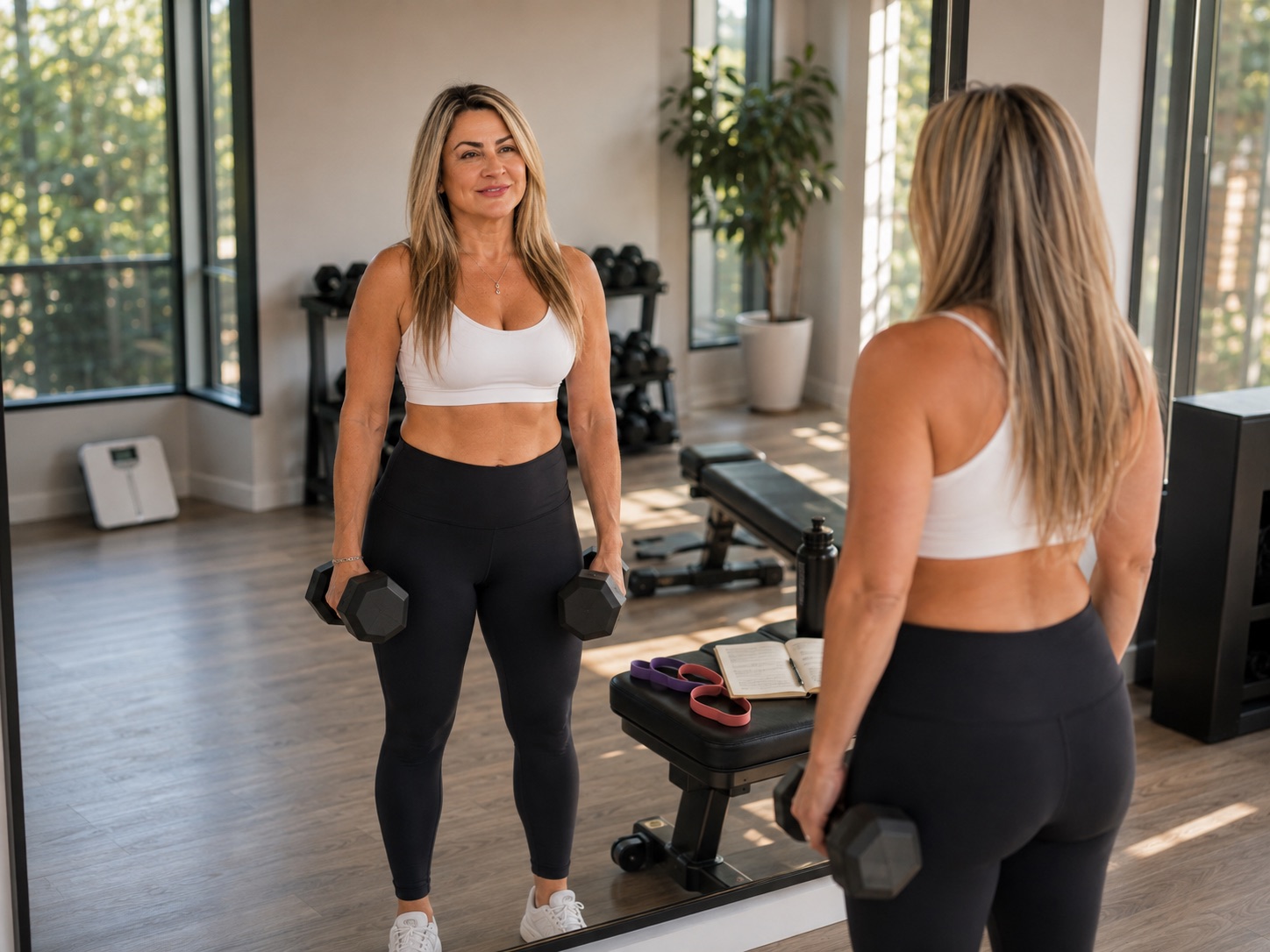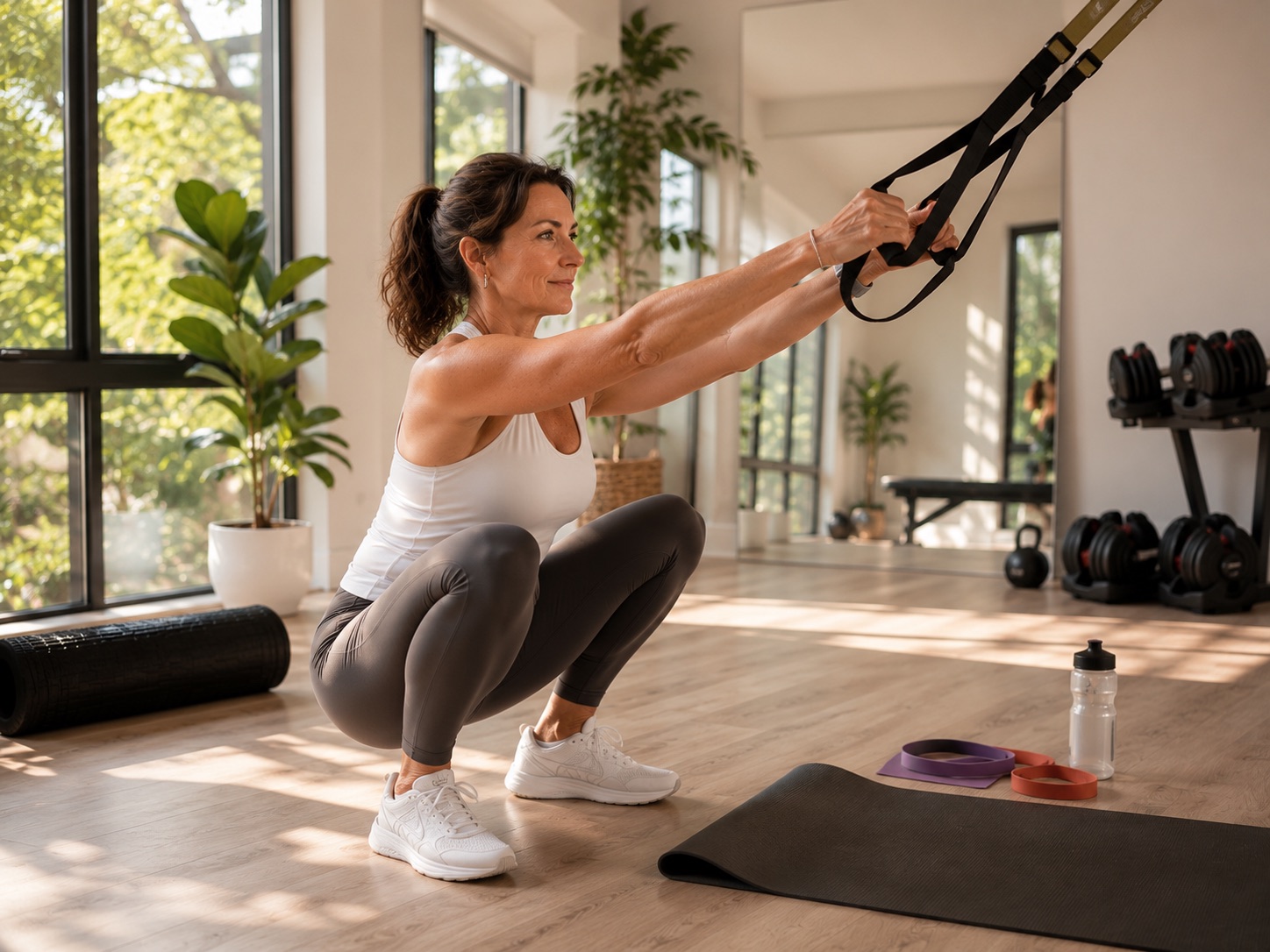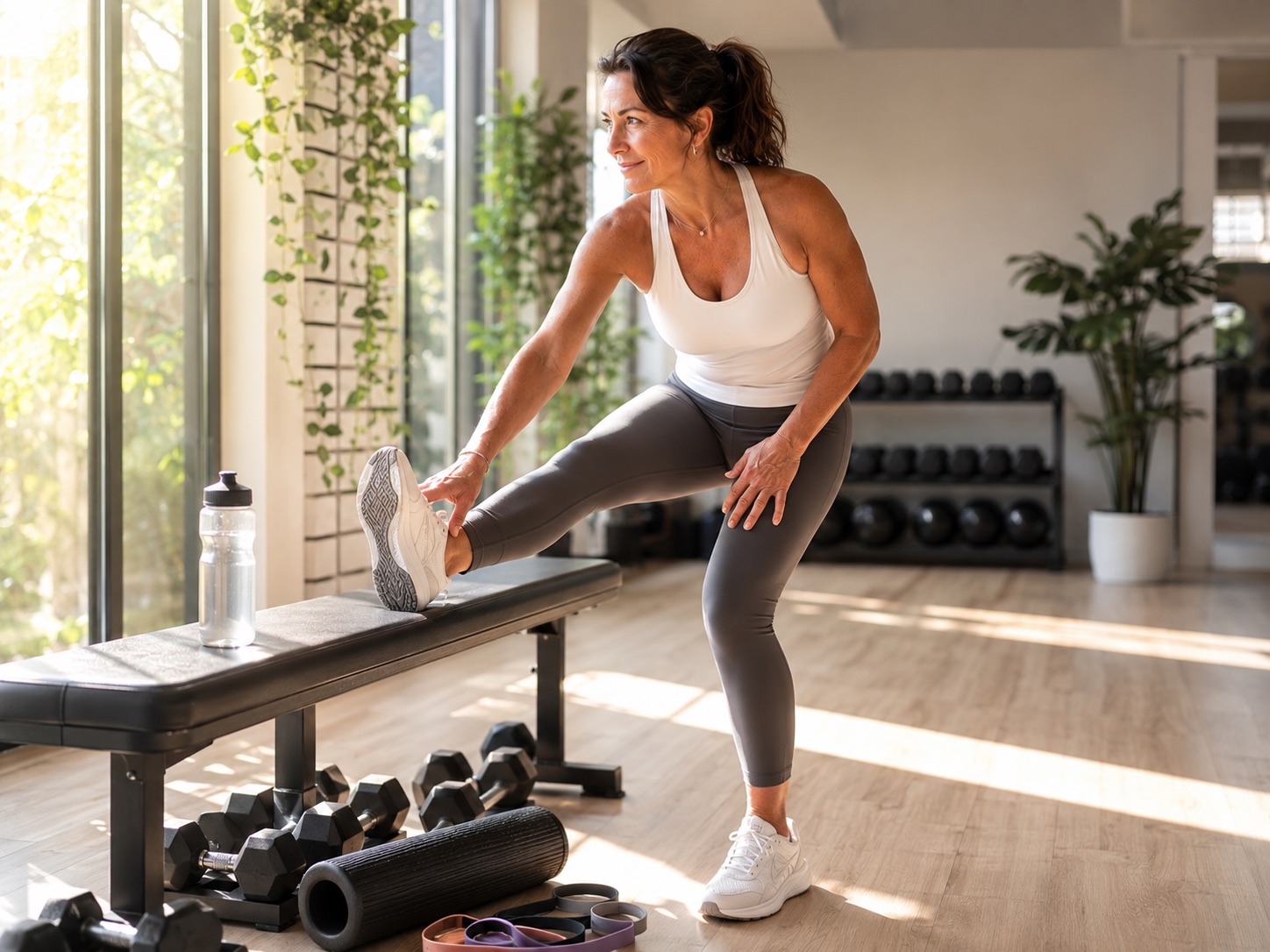
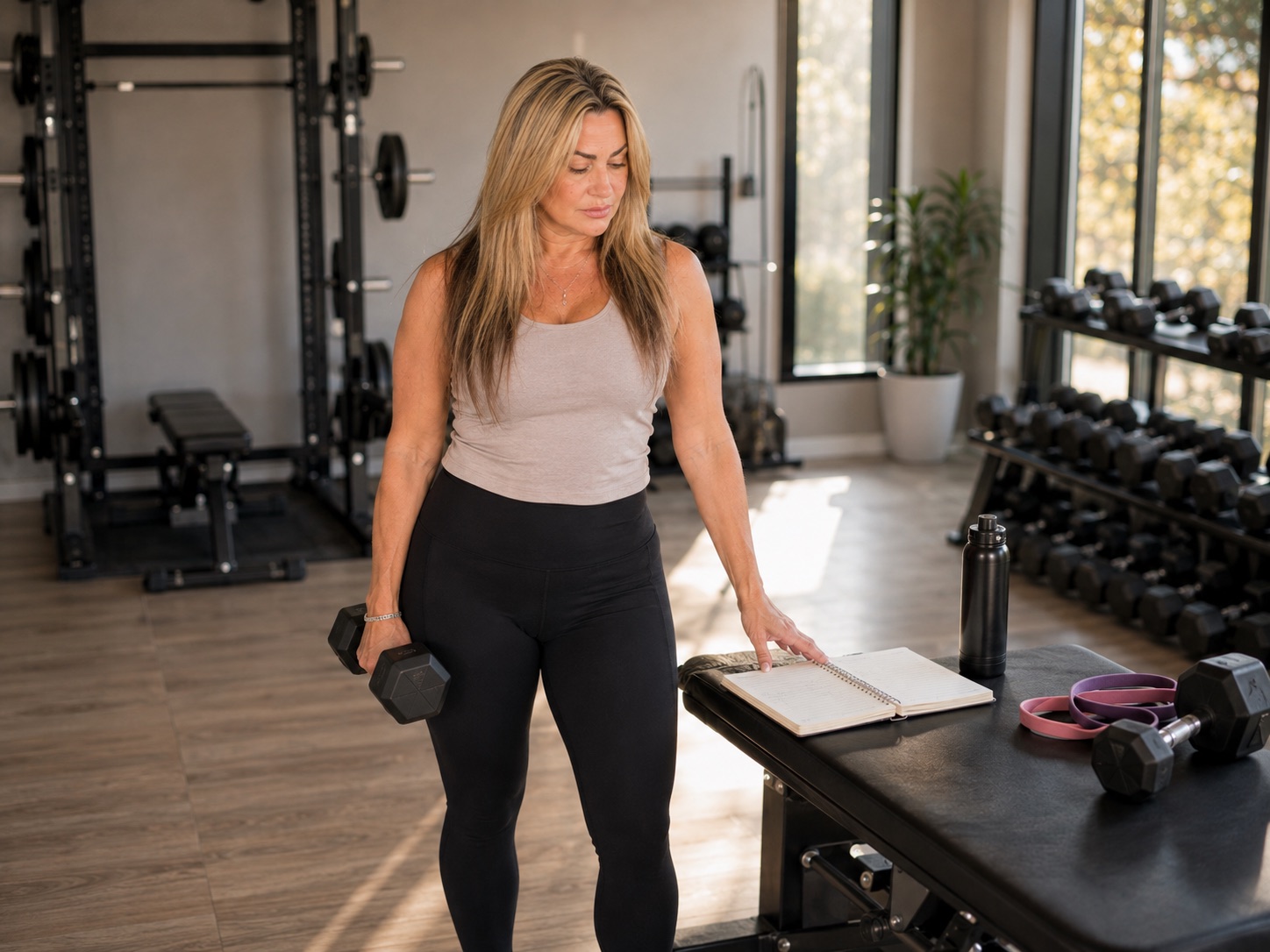
Feel out of shape after 40? Learn how to start strength training safely, build confidence, and get stronger without punishing workouts or gym intimidation.
Maybe you have walked past the weights and thought:
“I need to get in better shape before I try that.”
Maybe you have watched other women in the gym confidently adjusting machines, carrying dumbbells, and moving through workouts while you quietly wondered where they learned what they were doing.
Maybe it has been years since you exercised consistently.
Maybe you have never lifted weights at all.
And maybe your body feels unfamiliar enough right now that the idea of walking into a gym and deliberately challenging it feels intimidating.
Here is where we need to change the order of the story.
You do not get in shape so you can strength train.
You strength train to become stronger, more capable, and increasingly fit.
You are allowed to begin before you feel ready.
You are allowed to start with light weights.
You are allowed to be awkward.
You are allowed to ask how the machine works.
You are allowed to learn.
Nobody begins as the woman who knows exactly what she is doing.
She becomes that woman by showing up enough times to learn.
Why Strength Training Matters After 40
As women move through their forties, fifties, and beyond, maintaining muscle becomes increasingly important.
Muscle supports far more than appearance.
It helps you climb stairs, carry groceries, get off the floor, lift luggage, protect your joints, maintain balance, and remain physically independent as you age.
It also matters for body composition.
If your goal is to lose fat and change the shape of your body, simply trying to become lighter is not the whole answer.
You want to keep—or build—the tissue that makes you strong.
That means giving your muscles a reason to stay.
Strength training provides that reason.
You Are Not Too Out of Shape to Begin
This is one of the most common misconceptions women carry into fitness.
They believe they must first lose twenty pounds.
Walk for a few months.
Improve their stamina.
Become more flexible.
Then they will be “ready” for strength training.
But strength training itself can be adapted to almost any starting level.
A squat does not have to begin with a barbell on your back.
It may begin by standing up from a bench.
A push-up does not have to happen on the floor.
It can begin against a wall or bench.
A row can begin with a light cable or resistance band.
A deadlift can begin with two light dumbbells.
The movement meets you where you are.
Then you build from there.
Your First Goal Is Not to Crush the Workout
Your first goal is to learn.
This matters.
Women sometimes begin exercising with the idea that a workout only counts if it leaves them exhausted, drenched in sweat, or barely able to walk the next morning.
That is not the standard.
Especially in the beginning, your workout should teach you how your body moves.
You are learning how to set up the machine.
How to hold the dumbbell.
How far you can comfortably squat.
How to breathe while lifting.
How heavy a weight feels.
How much recovery you need.
How your joints respond.
You are collecting information.
A successful first workout may leave you thinking:
“I could have done a little more.”
That is completely fine.
You are coming back.
Start With Two Strength Workouts Per Week
You do not need six workout days.
You do not need to train every morning.
You do not need a complicated split where Monday is glutes, Tuesday is shoulders, Wednesday is hamstrings, Thursday is arms, and somehow your entire life has become organized around the gym.
Start with two full-body strength workouts per week.
That gives you enough practice to begin learning movements while allowing plenty of recovery between sessions.
For example:
Monday and Thursday.
Tuesday and Saturday.
Wednesday and Sunday.
Choose the pair that fits your actual schedule.
The specific days are less important than your ability to repeat them.
If two days eventually feels easy and you are recovering well, you can consider adding a third.
But do not build week six before you have completed week one.
Keep Your First Workouts Simple
You do not need fifteen exercises.
A beginner strength workout can be built around five or six movement patterns.
You want something for your legs.
Something for the back of your body.
Something that pushes.
Something that pulls.
Something for stability.
Something that helps you practice carrying or controlling your body.
A simple workout might include:
A leg press or sit-to-stand squat.
A dumbbell Romanian deadlift or glute bridge.
A chest press machine or elevated push-up.
A seated cable row.
A lat pulldown.
A farmer carry or simple core exercise.
That is enough.
You do not need to use every piece of equipment in the gym.
Machines Are Not “Cheating”
Some women assume free weights are real strength training and machines are somehow inferior.
That is unnecessary.
Machines can be extremely useful, especially when you are new.
They can help you learn how to produce force through a more controlled movement path.
They may feel less intimidating.
They often require less setup.
You can usually adjust resistance quickly.
And because balance demands may be reduced, you can focus more directly on the muscles doing the work.
Dumbbells, barbells, resistance bands, cables, bodyweight exercises, and machines can all be useful.
The best tool is the one that allows you to train safely, progressively, and consistently.
How Heavy Should Your Weights Be?
This question worries beginners because nobody wants to choose a weight that is embarrassingly light.
Forget embarrassment.
Choose a weight that allows you to move with control.
For many beginner exercises, a reasonable starting range may be around eight to twelve repetitions.
By the final few repetitions, you should feel like you are working.
But your technique should still look similar to the first repetition.
If you could easily perform twenty more repetitions, the weight is probably too light.
If your form falls apart after three, it is too heavy.
You are looking for challenge without chaos.
And the correct weight will vary dramatically between exercises.
Your leg press weight may be much heavier than your shoulder press weight.
That is normal.
Stop Comparing Your Starting Weight to Someone Else’s Working Weight
The woman beside you may be using forty-pound dumbbells.
You do not know her history.
She may have been training for five years.
She may have started with tens.
Her current weight tells you absolutely nothing about what your weight should be.
Use the resistance that challenges your muscles appropriately today.
That is your assignment.
Strength is built from your starting point—not someone else's.
Learn the Difference Between Hard and Wrong
Strength training should feel challenging.
Muscles may burn.
Your breathing may become heavier.
Your heart rate may increase.
The last repetitions of a set may require concentration.
That does not automatically mean something is wrong.
Sharp pain is different.
Sudden joint pain is different.
Numbness is different.
Instability is different.
Pain that becomes progressively worse as you continue is information you should not ignore.
You do not earn extra credit for pushing through a warning signal.
Being strong includes learning when your body is working hard and when it is asking you to stop.
You Do Not Need to Be Sore for the Workout to Work
Soreness often gets treated like proof.
“If I’m not sore, I didn’t work hard enough.”
That is not true.
You may experience muscle soreness when you begin a new program because your body is adapting to an unfamiliar demand.
Over time, the same workout may produce less soreness.
That does not mean it stopped working.
Progress is better measured by what you can do.
Are you lifting more?
Completing more repetitions?
Moving with better control?
Recovering more quickly?
Feeling more confident?
Those are useful indicators.
Walking down the stairs sideways because your legs hurt is not the objective.
Your Workout Does Not Have to Be Long
You can accomplish a lot in thirty to forty-five focused minutes.
Long workouts are not automatically more effective.
They may simply contain more exercises, longer conversations, longer rest periods, or unnecessary volume.
Especially when you are beginning, shorter workouts can make consistency easier.
If you know strength training requires two hours, it becomes much harder to fit into a normal week.
If you know you can complete the most important work in forty minutes, the barrier becomes smaller.
Your workout needs enough time to create a useful training stimulus.
It does not need to consume your evening.
Take Rest Between Sets
You do not need to keep moving every second for the workout to count.
Strength training involves periods of effort and periods of recovery.
Rest allows you to perform the next set with better strength and technique.
For many beginner exercises, resting approximately one to two minutes may be reasonable.
You may need more after a challenging leg exercise.
You may need less after something lighter.
This is not circuit class unless you intentionally want it to be.
Sit down.
Drink water.
Breathe.
Then lift again.
Rest is part of strength training.
Write Down What You Do
Do not rely on memory.
Record the exercise.
The weight.
The repetitions.
Maybe one quick note about how it felt.
For example:
Leg press: 70 pounds, 10 reps, 10 reps.
Chest press: 20 pounds, 10 reps, 8 reps.
Cable row: 30 pounds, 12 reps, 12 reps.
This creates something incredibly valuable:
Evidence.
Next week, you know where to begin.
You may repeat the same weight.
You may add a repetition.
Eventually you may increase the resistance.
This is how strength training becomes measurable instead of random.
Progress Slowly Enough to Stay Consistent
When something starts working, people often try to accelerate it.
You complete two workouts, feel energized, and decide you should probably train five days next week.
You add more exercises.
More cardio.
More steps.
More restrictions.
Then everything becomes harder to recover from.
Progress does not require constant escalation.
You may stay with two weekly workouts for several months and simply become stronger within those sessions.
That is progress.
More is useful only when your current routine is no longer enough.
Use the Smallest Progression That Works
Progressive overload sounds technical.
It simply means your body needs gradually increasing challenge if you want it to keep adapting.
That challenge can increase in several ways.
You might add one repetition.
Increase the weight slightly.
Add another set.
Improve your range of motion.
Move with better control.
Use a slightly more challenging exercise variation.
You do not have to change everything every week.
One small progression is enough.
For example, perhaps you perform ten repetitions with a twenty-pound dumbbell this week.
Next week you perform eleven.
Then twelve.
Eventually you try twenty-five pounds.
That is how strength quietly accumulates.
What If You Feel Embarrassed at the Gym?
Most people are thinking about themselves.
They are checking their form.
Remembering their next exercise.
Watching their rest timer.
Trying not to make a weird face during the final repetition.
They are not conducting a detailed evaluation of you.
And even if someone notices that you are new?
You are new.
That is not shameful.
Every experienced lifter in the building was once learning how to adjust the seat.
Confidence does not arrive before experience.
Experience creates confidence.
Have a Plan Before You Walk In
Gym anxiety becomes worse when you enter without knowing what to do.
Write down five exercises before you arrive.
Know which machine you are looking for.
If the machine is occupied, have one alternative.
That prevents the wandering feeling that makes beginners uncomfortable.
Your workout might say:
Leg press.
Chest press.
Seated row.
Glute bridge.
Lat pulldown.
Farmer carry.
Done.
You do not need to improvise.
Follow the list.
Learn One New Thing at a Time
You do not need to understand the entire gym.
Pick one machine.
Learn how to adjust it.
Practice the movement.
Next week, learn another.
Over several months, the gym that once looked overwhelming becomes familiar territory.
You know where the dumbbells are.
You know how the cable attachments work.
You know which bench you like.
You know how to warm up.
Confidence grows quietly through exposure.
Strength Training Will Not Make You Bulky Overnight
Many women still worry about this.
Building significant muscle takes time, consistent training, nutrition, and progressive resistance.
You do not accidentally become heavily muscular because you picked up dumbbells.
For most women over 40, gaining meaningful muscle is something you have to deliberately work toward.
And muscle can change your shape in ways many women actually want.
More definition.
Stronger-looking arms.
More shape through the shoulders.
Stronger legs.
Better posture.
A firmer body.
You decide what your goals are.
But fear of becoming instantly “too muscular” should not keep you from becoming strong enough.
Eat Like Someone Who Is Training
Starting strength training does not mean beginning an extreme diet at the same time.
Your body needs nourishment.
Protein supports muscle repair.
Carbohydrates help provide energy for training.
Fruits and vegetables contribute nutrients and fiber.
Dietary fat supports a balanced eating pattern and adds satisfaction.
If fat loss is one of your goals, portion awareness and overall intake still matter.
But the goal is not to eat as little as possible.
It is to create an eating pattern that supports your training while moving your body composition in the direction you want.
A depleted body does not necessarily train better because the calories are lower.
Protein Deserves More Attention
Women who begin strength training often focus on exercise while leaving nutrition unchanged.
Protein deserves specific attention.
Include a meaningful protein source in your main meals.
That may include chicken, turkey, beef, fish, eggs, Greek yogurt, cottage cheese, tofu, beans, lentils, or a protein shake when convenience helps.
You do not need to eat like a bodybuilder.
You do want enough protein available to support the tissue you are asking your body to maintain and build.
Do Not Fear Carbohydrates
You are lifting weights.
Your body uses energy.
Carbohydrates can help support that work.
Oatmeal.
Potatoes.
Rice.
Fruit.
Bread.
Pasta.
Beans.
They can all fit.
The amount should match your goals, activity, appetite, and overall nutrition.
But eliminating carbohydrates because you started trying to lose fat often makes training harder than it needs to be.
Food should support the life you are building.
Not simply make the scale move faster.
Walking Is an Excellent Partner to Strength Training
You do not need to choose between walking and lifting.
Walking complements strength training beautifully.
It supports daily activity.
Cardiovascular health.
Recovery.
Stress management.
And it is easy to scale based on your current fitness level.
A beginner week may include two strength workouts and several short walks.
That is a legitimate fitness program.
You can build from there.
Do Not Add Punishing Cardio Because You Think Strength Training Is Not Enough
Strength training may not leave you dripping sweat in the same way a hard cardio session does.
That does not mean it is ineffective.
The purpose is different.
Strength training is asking your muscles to produce force and adapt.
Cardio challenges the cardiovascular system in different ways.
Both can belong in your routine.
You do not need to finish lifting and then immediately punish yourself with an hour on the treadmill because you feel like the workout did not burn enough calories.
Let strength training do its job.
Your First Month Should Feel Almost Boring
This is a good thing.
Use the same basic exercises.
Practice them.
Record your results.
Come back.
You do not need a completely different workout every session.
Repeating movements gives you an opportunity to improve.
It lets you compare last week with this week.
It creates familiarity.
The fitness industry often sells novelty because novelty is entertaining.
Your body needs consistent stimulus more than constant entertainment.
A Simple Beginner Strength Workout
Here is one possible full-body starting structure:
1. Leg Press
Perform two sets of approximately eight to twelve controlled repetitions.
Adjust the seat so the movement feels comfortable through your hips and knees.
2. Dumbbell Romanian Deadlift
Perform two sets of approximately eight to twelve repetitions with light dumbbells.
Focus on pushing the hips backward while maintaining a controlled spine position.
3. Machine Chest Press
Perform two sets of approximately eight to twelve repetitions.
Use a weight that becomes challenging near the end without forcing you to lose control.
4. Seated Cable Row
Perform two sets of approximately eight to twelve repetitions.
Pull with control rather than jerking the weight.
5. Lat Pulldown
Perform two sets of approximately eight to twelve repetitions.
Think about pulling the elbows down while keeping the movement controlled.
6. Farmer Carry
Hold manageable dumbbells at your sides and walk with steady posture for a short distance or period of time.
Rest as needed between exercises.
If you have health conditions, injuries, significant pain, recent surgery, or concerns about beginning exercise, get individualized guidance from an appropriate healthcare or fitness professional.
What If That Workout Is Too Much?
Do less.
This is important.
Maybe your first workout contains only four exercises.
Leg press.
Chest press.
Row.
Farmer carry.
That counts.
You can add exercises as your work capacity improves.
The goal is to leave with enough confidence to return.
Not enough soreness to make you fear Thursday.
What If It Feels Too Easy?
That is useful information too.
Next time, increase the challenge slightly.
Add repetitions.
Increase the weight by the smallest available amount.
Keep the movement controlled.
Beginners often improve quickly because the body is learning both the movement and the strength demand.
Enjoy that.
But do not turn early progress into a race.
Your Body Does Not Need Punishment for Being Out of Shape
This may be the most important part.
If you feel unhappy with your body today, it is easy to approach exercise with anger.
You think:
“I let myself go.”
“I should never have gotten this weak.”
“I cannot believe I am starting over.”
That mindset makes every workout a punishment for who you became.
Try something different.
You are not exercising because your current body deserves consequences.
You are training because your current body deserves strength.
That distinction changes the experience.
Track Capability Alongside Appearance
You may want to lose fat.
You may want smaller measurements.
You may want clothes to fit differently.
Those goals are valid.
Track something else too.
How much can you leg press?
Can you carry heavier groceries?
Can you walk upstairs without becoming winded?
Can you get off the floor more easily?
Can you lift a suitcase into the car?
Can you perform ten repetitions with a weight that once felt impossible?
Those wins make progress tangible even when appearance changes take longer.
What You Will Notice Before You Look Different
The mirror may not change first.
Your body often gives you other signs.
You stand taller.
Your movements feel more controlled.
Weights stop feeling intimidating.
You recover faster.
Your balance improves.
You start choosing a heavier dumbbell without thinking twice.
You realize you are carrying something you once would have asked someone else to move.
Those are the early signs.
Do not overlook them while waiting for the visual ones.
Confidence Comes After Repetition
You may be waiting to feel confident enough to walk into the weight room.
That is backwards.
You walk into the weight room uncertain.
Then you survive.
You come back.
You recognize the machines.
You perform the exercises again.
One day, someone new walks into the gym looking lost.
And you realize something surprising.
You know what you are doing.
That is how confidence happens.
Not through thinking.
Through evidence.
What If You Fall Off for a Few Weeks?
Come back.
Do not punish yourself.
Do not double your workouts.
Do not start from zero emotionally.
Return to the exercises you know and reduce the weights slightly if needed.
See how your body responds.
Then rebuild.
Strength training is not a streak.
You are not trying to create a perfect record.
You are creating a relationship with strength that lasts long enough to survive vacations, stressful work periods, illness, holidays, and normal life.
After 40, Fitness Should Become More Useful
You may still care about how your body looks.
You are allowed to.
But fitness becomes much more meaningful when the goal expands beyond appearance.
You are training for your sixties.
Your seventies.
Your eighties.
For vacations you have not taken yet.
For grandchildren you may want to pick up.
For luggage.
Stairs.
Hikes.
Independence.
Confidence.
A body you trust.
You are not just building a workout habit.
You are building physical options for your future.
Your First Four Weeks
Keep the mission simple.
Train twice per week.
Use five or six basic exercises.
Perform roughly two sets of each.
Choose weights that feel challenging but controlled.
Write down what you do.
Walk regularly.
Eat balanced meals with enough protein.
Sleep and recover as well as your current life allows.
Repeat the same basic workouts long enough to become familiar with them.
Do not add complexity just because simplicity feels too ordinary.
Four weeks of boring consistency can teach you far more than four days of extreme motivation.
The Fire & Grace Perspective
Fire says pick up the weight.
Grace says start with the weight you can actually control.
Fire says challenge yourself.
Grace says you are allowed to learn.
Fire says become stronger.
Grace says you do not have to hate the body you are strengthening.
You do not need to arrive at the gym already confident.
You do not need to be thinner.
You do not need to be coordinated.
You do not need expensive clothes.
You do not need to know every exercise.
You need a starting point.
Two workouts.
A few movements.
A notebook.
A willingness to come back.
That is enough.
There is a version of you six months from now who knows which weights to grab.
Who understands the machines.
Who sees muscles appearing where she did not expect them.
Who carries herself differently because she knows what her body can do.
You do not have to become her today.
You only have to complete the workout that begins creating her.
FAQ
Am I too out of shape to start strength training after 40?
No. Strength training can be scaled to your current ability using machines, light dumbbells, resistance bands, supported exercises, or bodyweight movements. You do not need to become fit before beginning.
How many days a week should a beginner woman over 40 strength train?
Two full-body strength sessions per week is a practical starting point for many beginners. As your experience and recovery improve, you may eventually choose to add another session.
How heavy should my weights be when I start?
Choose a weight that allows controlled repetitions while becoming noticeably challenging near the end of the set. If the exercise is extremely easy, gradually increase the resistance. If your technique breaks down quickly, reduce it.
Should I use machines or free weights?
Both can be effective. Machines are often especially beginner-friendly because they provide a more guided movement path. Dumbbells and other free weights can be introduced gradually as your confidence and technique improve.
Will strength training make me bulky?
Significant muscle growth requires time, consistent progressive training, and supportive nutrition. Most women will not suddenly become bulky from beginning resistance training. Building muscle usually produces gradual changes in strength, shape, and definition.
Should I lose weight before I start lifting weights?
No. If fat loss is a goal, strength training can be part of the process from the beginning because it helps provide a reason for your body to maintain valuable muscle.
How long should my beginner strength workout be?
A focused beginner workout may take roughly 30 to 45 minutes, although shorter sessions can also be useful. The quality and consistency of the training matter more than making the workout unnecessarily long.
What if I am extremely sore after my first workout?
Mild muscle soreness can occur after unfamiliar exercise. Reduce the next session if necessary and allow appropriate recovery. Sharp, severe, persistent, or worsening pain is different and should not simply be pushed through.
You do not need to become fit enough to earn your place in the weight room.
You already belong there.
Start lighter than your pride thinks you should.
Learn the movements.
Write down the numbers.
Come back next week.
Let strength accumulate quietly.
Fire & Grace is about helping women build bodies they can trust—not through punishment, extremes, or trying to become someone else, but through practical choices repeated long enough to change what feels possible.
Your first workout does not have to prove anything.
It just has to happen.
Pick up the weight.
Learn what your body can do.
Then come back and give it another chance to surprise you.
Strong looks good on you.
Fire & Grace shares general fitness, nutrition, and personal-development education. This article is not medical advice, diagnosis, treatment, therapy, medical nutrition therapy, or injury rehabilitation. Work with an appropriate licensed professional for your individual needs.