
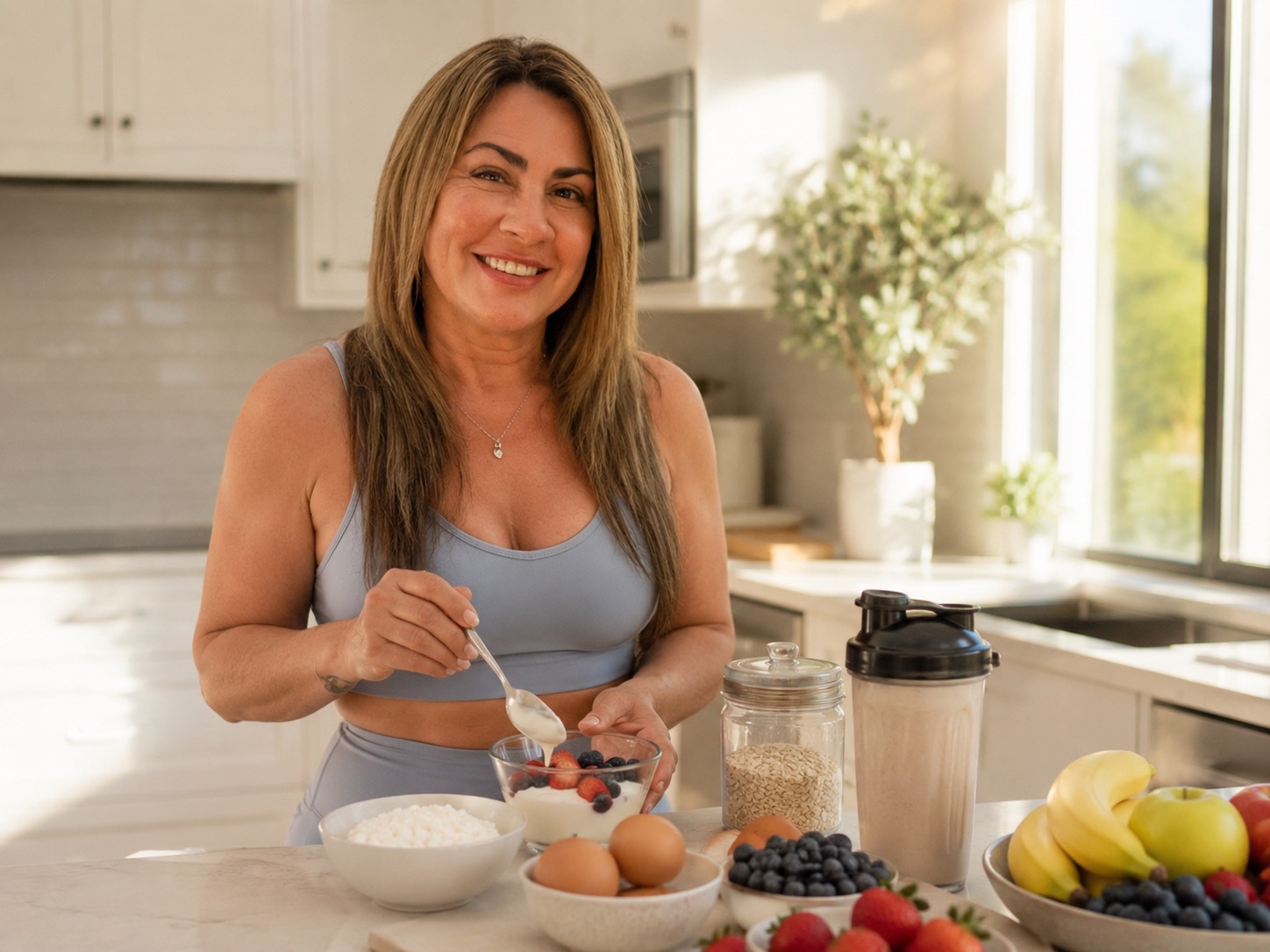
Wondering how much protein women over 40 really need? Learn how protein supports muscle, metabolism, body recomposition, and healthy aging with practical daily guidelines.
Many women spend years focusing on what to remove from their diet.
Less fat.
Less sugar.
Less bread.
Less dessert.
While eating nutritious foods certainly matters, one of the biggest nutritional mistakes women over 40 make isn't eating too much of something.
It's not eating enough protein.
Protein becomes increasingly important during midlife because your body is changing. Hormonal shifts, natural muscle loss, reduced recovery capacity, and changes in metabolism all increase your need to protect the muscle you already have while giving your body the building blocks to create more.
The goal isn't simply eating more meat.
The goal is supporting the body you're building.
Muscle Is Built in the Kitchen Too
Strength training provides the signal for muscles to grow.
Protein provides the raw materials.
Without enough protein, your body has a harder time repairing muscle tissue after exercise. Recovery may be slower, progress can stall, and preserving muscle during weight loss becomes much more difficult.
Think of strength training as hiring construction workers.
Protein is the building material they need to do the job.
Without enough bricks, the house doesn't get built.
How Much Protein Do Women Over 40 Actually Need?
Many older nutrition guidelines recommend amounts designed to prevent deficiency—not amounts that optimize strength, muscle, or healthy aging.
For active women over 40, especially those who strength train, a practical target is often around:
0.7 to 1.0 grams of protein per pound of goal body weight per day.
For example:
- Goal weight 140 pounds: approximately 100–140 grams daily
- Goal weight 150 pounds: approximately 105–150 grams daily
- Goal weight 170 pounds: approximately 120–170 grams daily
Fire & Grace generally encourages women who are strength training to work toward approximately 1 gram per pound of goal body weight, while recognizing that consistency matters far more than perfection.
If someone currently eats only 50 grams per day, trying to jump immediately to 140 grams usually isn't realistic.
Progress works better.
Don't Chase Perfect. Build Better.
Nutrition doesn't have to become another all-or-nothing project.
Instead of worrying about the entire day, focus on improving one meal at a time.
Could breakfast include protein?
Could lunch include a larger serving?
Could an afternoon snack become more satisfying?
Small improvements repeated every day create meaningful change.
What Does 30 Grams of Protein Look Like?
Many women are surprised by how little protein they actually eat.
Examples of roughly 25–35 grams include:
- 5–6 ounces grilled chicken breast
- 1½ cups low-fat cottage cheese
- Greek yogurt with added protein
- Lean ground beef
- Turkey breast
- Protein shake made with high-quality whey or milk protein
- Eggs paired with egg whites and Greek yogurt
Notice that most servings are larger than people expect.
That's why intentionally planning protein makes such a difference.
Why Protein Helps With Body Recomposition
Many women want to lose weight.
Fire & Grace focuses on building a healthier body.
Those aren't always the same thing.
Protein helps preserve lean muscle while reducing body fat.
That means as fat decreases, muscle remains—or even increases—creating the firmer, stronger appearance many women are actually looking for.
This process is called body recomposition.
It often produces changes the scale cannot measure.
Clothes fit differently.
Posture improves.
Strength increases.
Confidence grows.
Protein Helps You Stay Full
Protein doesn't only support muscle.
It also tends to increase satiety.
Meals containing adequate protein often leave people feeling satisfied longer than meals built primarily around refined carbohydrates.
That doesn't mean carbohydrates are bad.
Far from it.
Carbohydrates fuel workouts and daily activity.
The goal is balance.
When protein becomes the foundation of a meal, the rest of the meal often falls into place naturally.
Spread Protein Throughout the Day
Instead of eating most protein at dinner, try distributing it across several meals.
For many women, this means aiming for approximately 25–35 grams per meal depending on their goals and appetite.
A simple day might look like:
Breakfast:Greek yogurt with berries and a protein shake.
Lunch:Grilled chicken salad with fruit.
Snack:Cottage cheese with pineapple.
Dinner:Lean steak, roasted vegetables, and potatoes.
This approach supports recovery while making protein goals feel much more achievable.
Protein Doesn't Need to Be Complicated
Social media often makes nutrition feel overwhelming.
You don't need expensive supplements.
You don't need complicated meal plans.
You don't need perfection.
You simply need enough high-quality protein, mostly whole foods, consistency, and patience.
The goal isn't becoming someone who eats perfectly.
It's becoming someone who consistently fuels the life she's building.
Build Strength One Meal at a Time
Women often believe confidence comes after reaching a certain weight.
In reality, confidence frequently begins much earlier.
It starts when you begin treating your body like something worth supporting instead of something that constantly needs fixing.
Every protein-rich meal is one small vote for the woman you're becoming.
Not because protein is magic.
Because consistently caring for yourself changes how you see yourself.
And that's where lasting transformation begins.
Is protein more important after menopause?
Protein becomes increasingly important during and after menopause because muscle loss naturally accelerates with age. Adequate protein combined with strength training helps preserve lean muscle and supports healthy aging.
Can eating more protein help with weight loss?
Protein can support weight loss by helping preserve muscle, improving fullness after meals, and supporting body recomposition when combined with regular strength training.
Is one protein shake a day okay?
Yes. Protein shakes can be a convenient way to help meet daily protein goals, especially when whole food intake falls short. They work best as a supplement to an overall balanced diet.
Should I eat protein after a workout?
Eating protein after strength training can support muscle repair and recovery. Many people aim to include protein within a couple of hours after exercising.
What if I don't like meat?
Protein can come from Greek yogurt, cottage cheese, eggs, milk, tofu, tempeh, beans, lentils, edamame, and high-quality protein powders, depending on your dietary preferences.
Can I eat too much protein?
Most healthy adults can safely consume higher protein intakes within recommended ranges, but anyone with kidney disease or certain medical conditions should follow guidance from their healthcare provider.
Does protein speed up metabolism?
Protein has a slightly higher thermic effect than carbohydrates or fats, meaning your body uses more energy to digest it. Its biggest benefit, however, is supporting muscle maintenance and body recomposition rather than dramatically increasing calorie burn.
Fire & Grace shares general fitness, nutrition, and personal-development education. This article is not medical advice, diagnosis, treatment, therapy, medical nutrition therapy, or injury rehabilitation. Work with an appropriate licensed professional for your individual needs.